Lexicon · Resin & Processing
Polyurethane Resin: Properties, Applications and Processing
Polyurethane resin, also known as PU resin, is a fast-curing two-component casting resin for molds, climbing holds, figures, prototypes and technical cast parts. Good results depend on dry storage, accurately weighed components, suitable release agents and quick, low-air mixing.
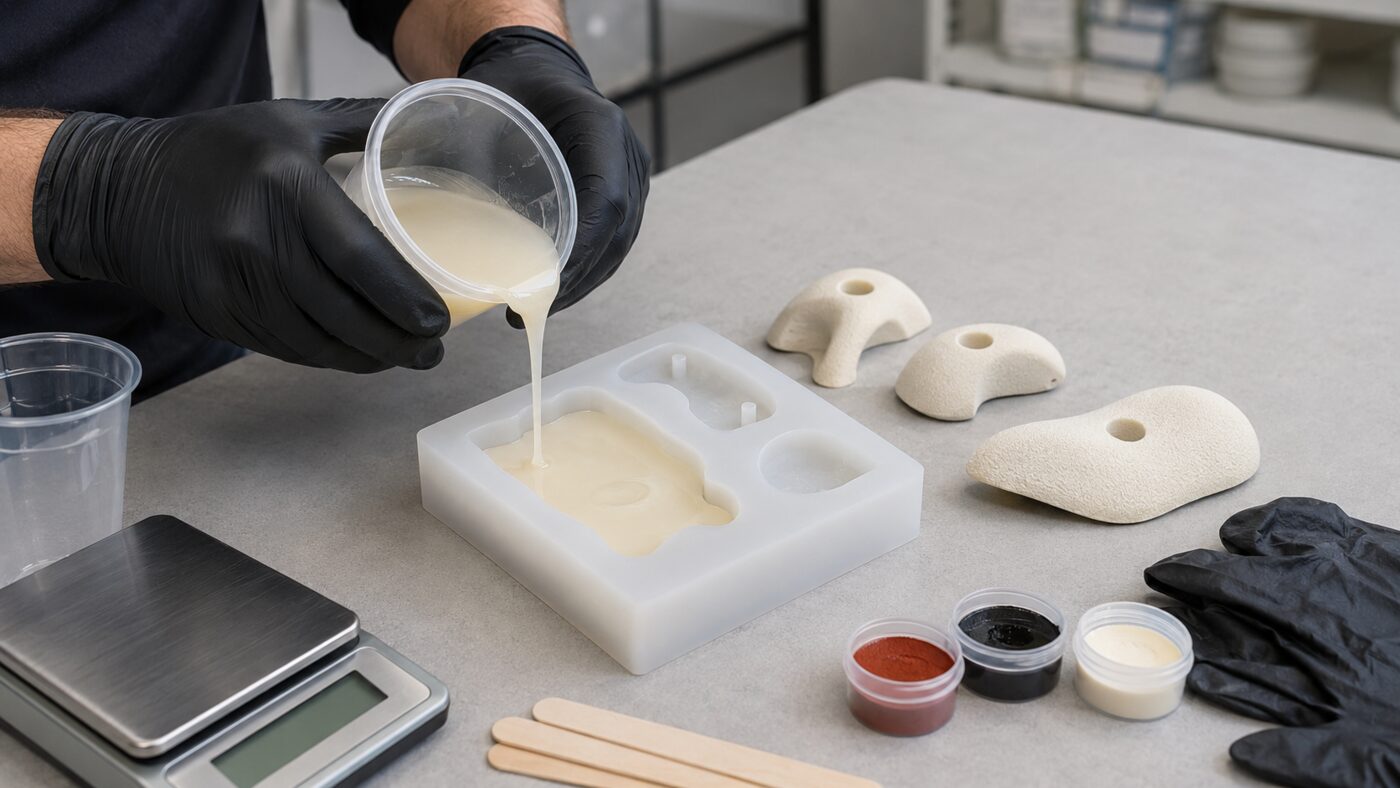
Polyurethane Resin in Brief
Polyurethane resin is ideal when molded parts need to be demolded quickly and produced in series. It reproduces details precisely, cures very quickly depending on the system and is especially suitable for silicone molds, model making, climbing holds and reproductions. PU resin reacts sensitively to moisture, so containers should be kept tightly closed, molds should be dry and mixing ratios must be followed exactly.
✔ Direct Recommendation
For fast mold casting, figures, climbing holds and smaller technical cast parts, a PU fast-casting resin such as Resinpal 1818 is the right choice. It cures fully within approximately 45 minutes and is available in multiple sizes. For laminating, structural bonding or components exposed to high chemical stress, epoxy resin is often the more robust solution.
→ Buy Resinpal 1818What is polyurethane resin?
Polyurethane resin is a reactive two-component synthetic resin. It consists of a resin component (A-component, polyol) and a hardener component (B-component, isocyanate) that chemically react with each other after mixing. The result is a solid polyurethane plastic that can be hard, impact-resistant, elastic or especially fast-curing depending on the formulation.
With castable PU resins, the focus is usually on fast and detailed production of molded parts. The material flows well into negative molds, reproduces fine surface structures precisely and can be sanded, drilled, primed or painted after curing.
Important – Moisture: PU resins are moisture-sensitive. Water or high humidity (> 70 %) can react with the isocyanate component and cause bubbles in the cast part. Processing and storage in a dry environment are therefore essential.
Typical Applications of PU Casting Resin
🧗 Climbing Holds
PU resin is ideal for textured climbing holds – it reproduces fine surface details from the silicone mold precisely and allows short production cycles. Fillers like quartz sand can be mixed in to increase grip on the surface.
🎭 Figures & Models
For model making, cosplay props, decorative objects and small production runs, PU resin is a popular choice. Silicone molds can be reused many times within a short period – perfect for detailed reproductions.
🔧 Prototypes
Housings, sample parts and functional models can be produced quickly and cost-effectively by casting. PU resin replaces complex machining processes in rapid prototyping when no highly stressed structure is required.
🏛 Reproductions
Historic ornaments, decorative profiles and individual design elements can be reproduced in series from a negative mold. The short curing time enables many casting cycles per working day.
Polyurethane Resin in Comparison
The choice of the right resin system depends on the application. This overview shows the key differences at a glance. A detailed material comparison is available in the Lexicon article on epoxy vs. polyester resin.
| Property | Polyurethane Resin | Epoxy Resin | Polyester Resin |
|---|---|---|---|
| Strength | Fast molds, cast parts and series production | Adhesion, laminate, coating | Classic GRP components |
| Curing | ✔ Very fast – minutes to ~45 min | Slow to medium (hours) | Medium (1–4 hrs) |
| Moisture | ⚠ Sensitive – risk of bubbles | Less sensitive | Application-dependent |
| Odor | Low to moderate | Low | Noticeable (styrene) |
| Typical projects | Figures, climbing holds, mold making | GRP laminates, bonding, sealing | Boat, bodywork, GRP repair |
How to Process Polyurethane Resin Correctly
Because of the short pot life, careful preparation is essential. All materials should be ready before you start mixing. You can calculate the exact amount of material you need in advance using the laminate calculator from Fiberglas Discount.
-
1
Prepare the mold
The mold must be clean and completely dry. Apply a suitable release agent in two to three thin layers depending on the mold material and let it dry fully. Without a release agent, the cured part will stick firmly in the mold. -
2
Condition the components
Resin and hardener should be at room temperature before processing (at least 18 °C). Material that is too cold flows less easily and may cure incompletely. -
3
Weigh accurately
Follow the mixing ratio by weight (not volume) precisely as specified on the product. Deviations of more than 5 % lead to curing defects or an altered final hardness. -
4
Mix quickly
Stir calmly but thoroughly and introduce as little air as possible. A stirring motion along the container wall prevents air bubbles. Observe the pot life – pour into the mold without delay. -
5
Pour in a thin stream
Pour the resin into the mold in a thin, steady stream – this minimizes air inclusions. Follow the maximum casting height specified for the system (for Resinpal 1818: up to 5 cm per pour). -
6
Demold and finish
Demold carefully only after sufficient through-curing. Sanding, painting or drilling should be carried out only after complete final curing. Use respiratory protection when sanding.
💡 Practical tip: Always close opened containers tightly and store them upright immediately after use. The hardener component (isocyanate) in particular reacts with air humidity and permanently loses quality – recognizable by cloudiness or increased viscosity.
Project Matrix: When Is PU Resin the Right Choice?
| Project | Recommendation | Important Note |
|---|---|---|
| Climbing holds | PU casting resin with suitable mold and fillers | Check mechanical requirements (EN 12572) in advance |
| Figures & decor | PU resin in a silicone mold | Use suitable PU color paste for coloring |
| Prototypes | PU resin for fast sample parts | Check technical suitability separately for highly stressed structural parts |
| GRP laminates | Usually epoxy or polyester resin | PU resin is not suitable for fiber-reinforced laminates |
Do Not Forget Suitable Accessories
For clean results, release agents, mixing cups, precision scales, stirrers, protective gloves and color pastes are essential. Available at Fiberglas Discount:
Safety and Storage
Polyurethane resin is a reactive chemical system. The isocyanate component (hardener) can irritate the respiratory tract and skin, and repeated contact can trigger permanent sensitization. Precautions from the very beginning are the best form of prevention. The safety data sheet always takes priority over general guidance.
⚠ Warning – Sensitization: Isocyanates can cause allergies upon repeated skin or respiratory contact. Once sensitized, a person must permanently avoid any further contact. Use protective equipment consistently from the very first use.
Suitable protective equipment – gloves, safety glasses, respiratory protection – can be found in the protective equipment range at Fiberglas Discount.
Expertise from Fiberglas Discount
Fiberglas Discount has supported users with synthetic resins, fiber composites, mold making and accessories since 1997. For PU resin projects, choosing the right system is especially important: resin, release agent, color, tools and protective equipment should be considered together. Find all information and products in the Lexicon and online shop.
FAQ About Polyurethane Resin
What is polyurethane resin?
Polyurethane resin is a two-component synthetic resin consisting of a resin component (polyol) and a hardener component (isocyanate) that chemically react after mixing to form a solid plastic. Depending on the formulation, the cured material can be hard and rigid, impact-resistant, or elastic. Castable PU resins are primarily used for mold casting, figures, climbing holds, prototypes and smaller molded parts, because they reproduce details accurately and enable short production cycles.
What is polyurethane resin especially suitable for?
Polyurethane resin is especially suitable for fast casting processes with a high number of cycles. The short curing time – approximately 45 minutes for Resinpal 1818 – makes it ideal for series production with many demolding cycles per day. Typical applications include climbing holds, model making, cosplay props, historic reproductions and product prototypes. Fillers such as quartz sand can be added to influence the surface texture and grip.
What is the difference between polyurethane resin and epoxy resin?
The main difference lies in curing speed and area of application. Polyurethane resin cures much faster (minutes to around 45 minutes) and is optimized for casting and mold making. Epoxy resin often requires several hours, but offers higher chemical resistance, better adhesion to many substrates and is especially suited for laminating, structural bonding and coatings. PU resin is also more sensitive to moisture than epoxy resin. The material choice therefore depends strongly on the specific project.
Do I need a release agent for polyurethane resin?
Yes, a release agent is essential in almost all cases when working with polyurethane resin. PU resin adheres very strongly to many materials – without a release agent, the cured part can rarely be removed from the mold without damage. Wax-based release agents are suitable for silicone molds and PVA release film for GRP or wood molds. Apply the release agent in two to three thin coats and allow it to dry completely. Suitable release agents are available in our shop.
Can polyurethane resin be colored?
Yes, polyurethane resin can be colored using special PU color pastes that are mixed into the A-component (resin) before combining. Water-based paints, acrylic colors or unsuitable pigments can interfere with the curing reaction and lead to defects, and should not be used. Add color paste in moderation: too much pigment negatively affects the curing reaction.
How safe is it to process polyurethane resin?
Processing is manageable when handled correctly, but requires consistent use of protective equipment. The isocyanate component can irritate the respiratory tract and skin, and may cause permanent allergies with repeated contact. Chemical-resistant nitrile gloves, safety glasses and good ventilation are mandatory; for frequent processing, add a half mask with an appropriate filter. Skin contact, splashes and inhalation of vapors must be avoided. Full safety instructions are found in the product-specific safety data sheet.